Language-Friendly Cities for Digital Nomads in 2026: How to Pick a Base Where Daily Life Forces You to Speak
Language-Friendly Cities for Digital Nomads in 2026: How to Pick a Base Where Daily Life Forces You to Speak
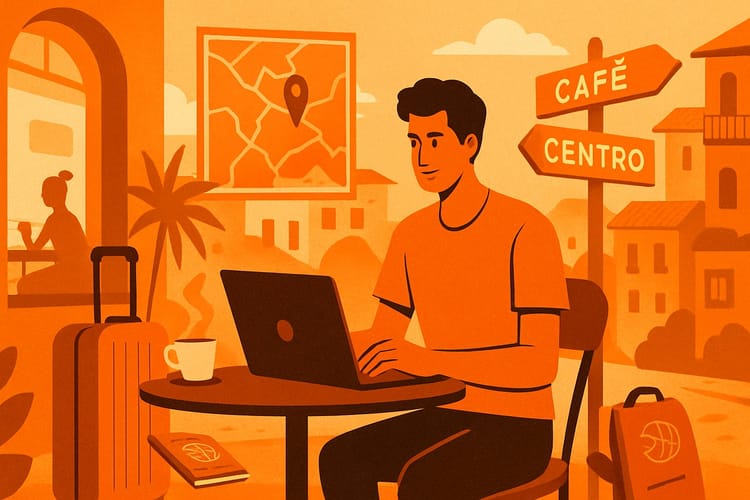
Language-friendly cities for digital nomads in 2026 are not just places with fast Wi-Fi, cheap rent, and a bunch of laptop zombies drinking flat whites. The best ones create daily reasons to speak, enough structure to build routines, and enough friction that you cannot hide inside English all day.
That matters because most nomads say they want immersion, then accidentally build a life that avoids it. They stay in expat-heavy neighborhoods, work in English-first coworking spaces, order through apps, and make friends who already speak fluent English. Then they wonder why six months in Lisbon, Medellín, or Bangkok did not make them conversational.
If you want your next base to actually improve your language skills, you need a different filter. You want a city where the basics of daily life create repeated speaking reps. That idea lines up with what we covered in our posts on local events for language learning while traveling, the language learning neighborhood walk, and digital nomad visa language requirements in 2026.
What makes a city language-friendly for digital nomads in 2026
A language-friendly city gives you four things.
- low-stakes daily interactions
- recurring local routines
- enough safety to experiment badly
- enough local-language necessity that English cannot save you every time
That last part is big. If a city is too easy in English, your progress gets soft. If it is too hard logistically, you burn out. You want the sweet spot where speaking badly is inconvenient, but survivable.
UNESCO keeps emphasizing the value of multilingualism and local-language participation in social inclusion, and travel behavior data from sources like Google Travel and remote work reporting from WIRED repeatedly show the same pattern, people shape behavior around the systems a city rewards. If everything can be handled in English and apps, that is exactly what most people will do.
The best city filter is not cost, it is conversation density
A lot of digital nomad content ranks for broad stuff like best cities for digital nomads 2026. Fine. Useful sometimes. But if your goal is language growth, the better keyword is really closer to language-friendly cities for digital nomads in 2026, because it changes the evaluation criteria.
Ask these questions before choosing a base:
1. Can I do daily errands in the local language?
Think groceries, pharmacies, transit, cafés, gyms, markets, barbers, front desks.
2. Are there recurring community rituals?
Weekly meetups, neighborhood sports, board-game nights, volunteer groups, religious gatherings, dance classes, and market routines matter more than one big expat event.
3. Is the local language audible in public life?
If all your inputs are English menus, English signs, English service, your environment will not teach much.
4. Can I build a repeatable neighborhood circuit?
This is the backbone of the neighborhood immersion routine. You want the same spots, same faces, same tiny conversations, over and over.
Three signs a city will actually make you better
Sign 1, you cannot outsource every interaction
Delivery apps and coworking cafeterias are convenience traps. A city gets more language-friendly when small life tasks still require speech.
Sign 2, locals are used to imperfect attempts
You do not need a place where everyone becomes your teacher. You need a place where awkward effort is tolerated.
Sign 3, your social life can happen outside the expat bubble
If every event is for internationals talking to other internationals, your social graph is basically language birth control.
City types that usually work better than expected
Mid-size cities over superstar capitals
Huge capitals often have more English infrastructure. Mid-size cities can be better because life happens more locally, and routines repeat faster.
Neighborhood-based cities over car-dependent sprawl
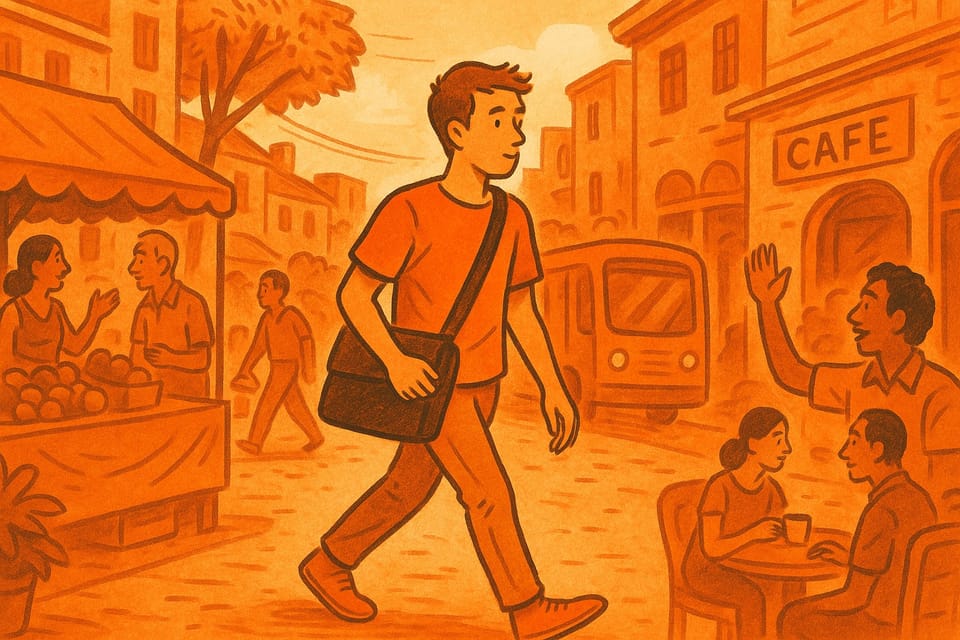
Walkability creates interaction density. If you can walk to markets, cafés, transit, and classes, you get more speaking reps without scheduling them.
Places with strong hobby culture
Dance scenes, climbing gyms, language exchanges, run clubs, makerspaces, and local workshops create recurring contact. That beats random networking events every time.
A practical scoring system for language-friendly cities for digital nomads in 2026
Before booking a month, score each city from 1 to 5 on these:
- local language necessity
- walkability
- recurring community events
- affordability near local neighborhoods
- transit usability in the local language
- friendliness to imperfect speakers
- availability of classes or hobby groups
- temptation level of the expat bubble
A city with a lower cost score but a terrible conversation score is a bad language base. Simple as that.
How to test a city in your first seven days
Do not wait three months to discover you built the wrong setup.
In your first week, try this:
- buy groceries without English
- ask for a recommendation at a local café
- attend one event where locals outnumber nomads
- join one recurring activity
- take one transit trip with local-language prompts only
- introduce yourself to one neighbor, receptionist, or regular shop owner
If all six feel possible, the city probably has legs. If every task pushes you back into English or isolation, the place may still be fun, but it is not doing much for your speaking.
The biggest mistake nomads make
They choose a country, not a routine.
That is backwards. Your language progress will come less from the passport stamp and more from the daily loop you build. The city matters because it makes certain loops easier and others harder.
A mediocre city with a strong neighborhood routine will beat a dream destination where you live in an English bubble. Every time.
So, what should you optimize for?
Not prestige. Not trendiness. Not the biggest nomad subreddit hype cycle.
Optimize for repeated, survivable contact with the local language.
That means choosing neighborhoods where you will be a regular, not just a tourist with a laptop. It means caring about transit, markets, classes, hobbies, and city rhythm. It means deciding whether your next base will make speaking inevitable or optional.
If speaking is optional, you probably will not do enough of it.
So before you book your next city, ask a better question than “Is this place good for digital nomads?” Ask “Will daily life here force me to speak enough to actually improve?”
If you had to pick your next base for language growth, what matters most to you, walkability, local community, visa friction, affordability, or something else?