
Local Events for Language Learning While Traveling in 2026: How Digital Nomads Turn City Rituals Into Real Speaking Practice
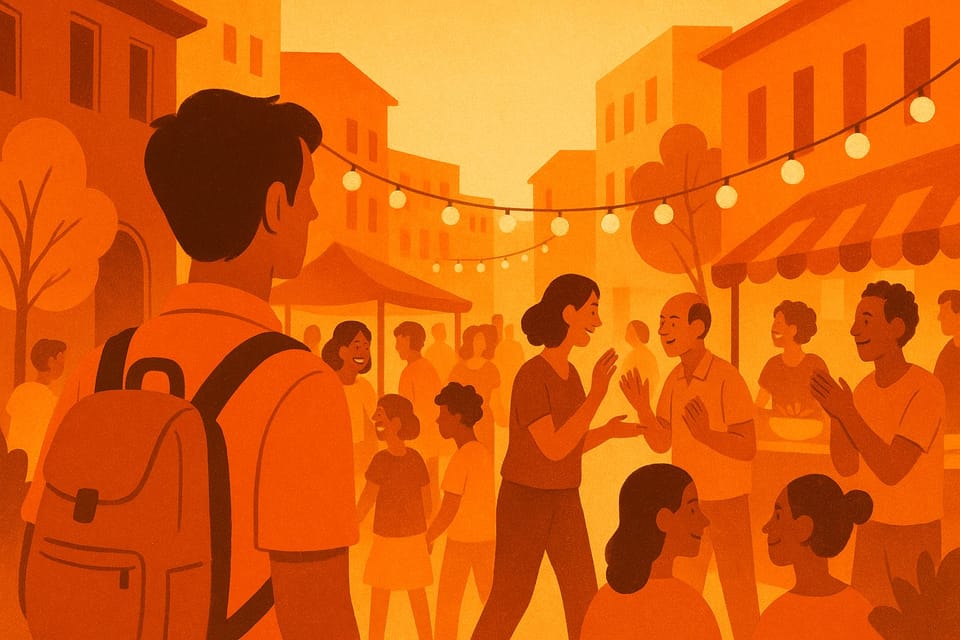
Local events for language learning while traveling in 2026 are one of the cleanest hacks digital nomads keep missing. Not because the events are hidden. They are usually right there, loud as hell, on flyers, WhatsApp groups, café chalkboards, coworking calendars, and neighborhood Instagram accounts. The miss happens because too many nomads treat a city like a backdrop instead of a living schedule.
If you want your language to improve while traveling, you need recurring situations where the same kinds of interactions happen again and again. Local events do that better than random app practice, and often better than forced meetups built for foreigners. A weekly market, a run club, a trivia night, a volunteer shift, a neighborhood class, a church dinner, a makerspace meetup, a cultural festival, a public lecture, a board game night, these are not just social options. They are repetition engines.
That is why local events for language learning while traveling in 2026 are such a strong keyword and an even stronger habit. The search intent is practical. People want to know where to meet locals, how to stop defaulting to English, and how to create speaking practice without making every interaction feel like a lesson. This topic answers all three.
Why local events work better than generic language apps when you travel
Apps are fine for maintenance. But they do not make a city feel usable.
Events do something different. They give you:
- repeated exposure to the same vocabulary field
- predictable social patterns you can rehearse and improve
- recognition from familiar faces, which lowers speaking anxiety
- context for slang, humor, and local references
- reasons to show up even when motivation dips
That last one matters more than people admit. Motivation is flaky. A recurring event on Tuesday night is solid. It gets you out of the apartment when your brain wants to hide behind remote work and takeaway food.
If you already liked the idea of a weekly language exchange system, local events are the next step. They take you out of learner-only spaces and into mixed environments where the language is doing real social work.
The best local events for language learning while traveling in 2026
Not every event is worth your time. You want formats that create natural repetition and actual conversation.
1. Small recurring hobby groups
Think running clubs, book clubs, climbing groups, dance classes, sketch nights, cooking circles.
These are great because the structure carries some of the conversation for you. You do not have to invent a social context from nothing. The shared activity gives you common language fast.
2. Neighborhood markets and community fairs
A weekly market sounds basic, but it is one of the best low-pressure speaking environments in any city. You ask about prices, ingredients, timing, recommendations, where things come from, whether they take cash, what is popular today. It is repetitive enough to improve and varied enough to stay useful.
3. Volunteer events
Cleanup days, food distribution, mutual aid projects, local workshops, community gardens, animal rescue support, all of these create practical conversation with shared purpose. Purpose helps because it kills awkwardness. You are there to do something, not just perform social confidence.
4. Public talks and cultural nights
Lectures, film screenings, gallery openings, neighborhood history walks, poetry nights, these are underrated because even when you do not speak much during the event, you leave with easy conversation starters before and after.
5. Coworking and professional community events
Yes, some coworking events are painfully fake. But the right ones are useful as hell, especially if you pick local industry meetups over generic “networking” sludge. They help you build professional vocabulary and stop sounding like a tourist who only knows food words.
That connects nicely with a neighborhood walk routine and city ritual based speaking practice because the real win is layering multiple recurring touchpoints into the week.
How to find local events without getting trapped in the expat bubble
This is where a lot of nomads blow it. They search in English, on global platforms, then act shocked when they land in rooms full of other foreigners.
Search in the local language too. Use simple local phrases for city events, neighborhood activities, workshops, community calendar, weekly club, volunteer, public lecture, and hobby meetup. Follow local cafés, libraries, cultural centers, bookstores, parks departments, universities, and sports studios. Ask baristas, front desk staff, market vendors, and regulars at your gym what people do on weeknights. Half the good stuff never hits the big international event platforms.
Useful event discovery channels include:
- local Facebook groups
- Instagram pages for neighborhood venues
- Eventbrite and Meetup, but filtered carefully
- coworking calendars
- university cultural centers
- city tourism boards and municipal calendars
- WhatsApp or Telegram neighborhood groups
Platforms help, but human tips are better. Once one local person tells you where people actually gather, the city gets easier fast.
The language learning system hidden inside city rituals
The trick is not just attending an event once. The trick is building event loops.
Let’s say you are in Mexico City, Lisbon, Bangkok, or Medellín. Instead of chasing novelty every night, you build a simple weekly stack:
- Tuesday market
- Wednesday run club
- Thursday coworking talk
- Saturday volunteer shift
- Sunday local café chess or board game meetup
Now the city starts repeating itself. Same phrases, same people, same decisions, same little social moves. That repetition is where speaking grows.
Research on second-language acquisition keeps pointing to the same boring truth: frequency plus meaningful use beats random intensity. The sexy version of travel is constant novelty. The useful version is recurring contact.
Keyword research snapshot for local events for language learning while traveling in 2026
This long-tail keyword works because it combines three rising intents. First, travelers keep searching for ways to meet locals without relying on dating apps or shallow networking events. Second, language learners want more speaking practice that feels real. Third, digital nomads in 2026 are increasingly trying to build routines instead of living like every month is a chaotic layover.
That makes local events for language learning while traveling in 2026 more specific and more clickable than generic “how to learn a language abroad” content. It promises a method rooted in actual city behavior. It also opens natural supporting angles like neighborhood immersion, local community building, recurring speaking practice, and event-based routines for remote workers.
How to turn one event into a speaking routine
Do not just show up and hope for chemistry. Go in with a tiny plan.
Before the event
- learn 8 to 12 useful phrases tied to the setting
- prepare two easy self-intro versions, short and medium length
- know one follow-up question you can ask anyone there
- decide your micro-goal, like speak to three people or ask two questions
During the event
- arrive early, quieter rooms are easier to enter
- ask practical questions first, they are lower pressure than personal ones
- notice repeated phrases and write them down later
- do not switch to English instantly the second it gets messy
After the event
- save names and where you met
- write down three phrases you want to reuse
- go back next week
That last part is the killer. Return visits change everything. Familiarity lowers social strain, and people stop treating you like a passing tourist.
The mistakes that waste these opportunities
Chasing only big events
Huge events look exciting, but they often produce shallow interaction. Smaller recurring ones are usually better for language growth.
Treating every event like a networking sprint
Nobody wants to feel harvested by a lonely nomad with a Notion template. Relax. Be normal. Talk because you are there, not because you are trying to optimize humans into language resources.
Never returning
One-off attendance is fine for exploration, weak for acquisition. If you want the language benefits, pick a few events and become a regular.
Staying in English because it feels efficient
Efficiency is overrated if your goal is connection. Use the local language early, even badly. People can work with effort. They cannot work with you silently surrendering after the first awkward moment.
How local events build the kind of fluency travel apps cannot
Events force you to handle ambiguity. You miss a joke. You hear a phrase twice before it clicks. Somebody references a neighborhood place you have never heard of. You ask again. You piece it together from context. That is not failure. That is acquisition doing its job.
They also expose register. The way people speak at a makerspace is different from a church event, which is different from a food stall, which is different from a startup meetup. If you only practice in apps or tutor sessions, you miss that social range.
This is also why local events work so well alongside weekly speaking reps and a decent daily neighborhood routine. One gives you social repetition. The other gives you environmental repetition. Together they make the language stick to the place.
Three event types worth testing this month
The practical event
A market, repair café, open workshop, or volunteer shift where language serves a task.
The social event
A board game night, neighborhood dinner, or hobby meetup where the goal is relationship building.
The identity event
A cultural lecture, community art night, local history walk, or religious gathering that teaches how people frame the city and themselves.
That mix gives you vocabulary, rhythm, and context, all without turning every day into a study schedule from hell.
What serious traveling learners should do in 2026
Stop looking for one perfect app that will make you “immersed” from your Airbnb. Get out into the city rhythm. Find two or three recurring local events for language learning while traveling in 2026, go back often enough that people remember you, and treat those events as your speaking gym.
Because that is what they are. Not entertainment. Not filler. Not cute cultural seasoning around your remote work life. They are where the city starts talking back, and where your language stops being theoretical.
Further reading and sources
- Language exchange club for digital nomads
- Language learning neighborhood walk
- Neighborhood language immersion for digital nomads
- City rituals and speaking practice
- Meetup
- Eventbrite
- World Economic Forum on digital nomad visas and remote work
- Harvard Business Review on building communities
- British Council on why speaking practice matters
If you are landing in a new city this month, what would help your language more, another hour in an app, or one recurring local event where the same people start expecting to see you again?