
Best Spanish-Speaking Destinations for Digital Nomads in 2026: Where Remote Work Actually Forces You to Speak
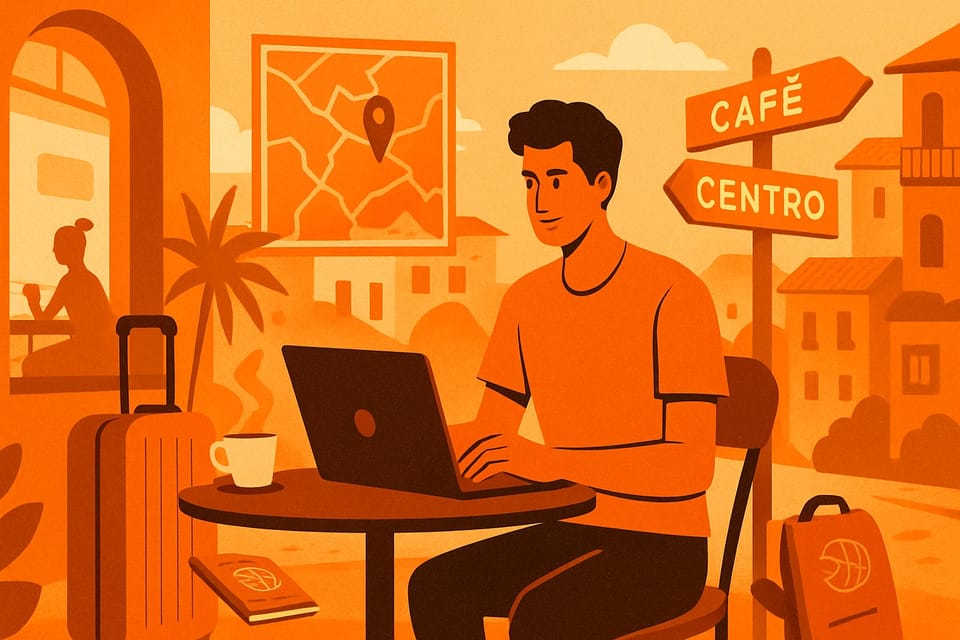
Best Spanish-Speaking Destinations for Digital Nomads in 2026: Where Remote Work Actually Forces You to Speak
The best Spanish-speaking destinations for digital nomads are not just the places with cute cafés, cheap rent, and a coworking space full of people ordering flat whites in English. If you actually want the language to move, the best Spanish-speaking destinations for digital nomads are the ones that give you enough comfort to keep working and enough friction to stop hiding in expat autopilot.
That balance matters. If you already have a digital nomad language routine, know why slow travel language learning beats city-hopping chaos, or want a cleaner first month language learning plan for digital nomads, choosing the right base is the multiplier. Pick well and daily life becomes practice. Pick badly and you are just taking Zoom calls in nicer weather.
What makes the best Spanish-speaking destinations for digital nomads actually good for learning
A lot of destination guides rank cities like they are fantasy football stats. Cost of living, sunshine, nightlife, and coworking count, sure. But if your goal includes Spanish, a few other factors matter more than people admit.
I care about five things:
- how hard it is to live entirely in English
- whether local routines create repeat conversation opportunities
- how stable the remote-work infrastructure is
- how clear the social path is from tourist to regular
- whether the city rewards staying longer than two weeks
That is why generic “best city for digital nomads” lists miss the point. A place can be comfortable for remote work and still be terrible for language progress.
Reputable destination roundups from Go Overseas, National Geographic, and Spain-focused remote work coverage from sites like Freaking Nomads keep circling the same truth: the best learning destinations are not just affordable; they create repeated contact with the language.
Why Spanish keeps winning for digital nomads
Spanish is still one of the smartest languages for location-independent people because it travels well. One language gives you access to much of Spain and a huge chunk of Latin America, which means you can carry momentum across countries instead of restarting from scratch.
It also helps that Spanish-learning infrastructure is everywhere:
- conversation exchanges are easy to find
- tutors are widely available
- local classes exist in most nomad-heavy cities
- media, podcasts, and subtitles are abundant
- basic survival conversations pay off immediately
If you are considering Spain specifically, the country keeps getting more relevant thanks to remote-work demand and policy support like the international teleworking visa. But Spain is not the only game in town, and honestly, it is not always the best learning move for every budget or personality.
The best Spanish-speaking destinations for digital nomads in 2026
Here is my no-BS shortlist.
1. Valencia, Spain
Valencia is one of the strongest all-around picks because it gives you a real city, strong infrastructure, manageable size, and enough local life to avoid the full international-bubble trap you get in parts of Barcelona.
Why it works:
- strong café and coworking scene
- walkable neighborhoods
- decent balance of locals and internationals
- easier pace than Madrid or Barcelona
- enough bureaucracy and daily-life friction to make Spanish useful fast
Where people screw it up: they cluster with other remote workers, rent in the most international neighborhoods, and speak Spanish only when ordering coffee.
Valencia works best if you stay at least a month, commit to one neighborhood, and pair workdays with recurring local habits like the same gym, market, or language exchange.
2. Medellín, Colombia
Medellín is still a heavyweight because the city makes it easy to meet people, build routines, and keep your work life stable. The climate helps, the social energy helps, and the city gives you a ton of ways to turn online life into real-world repetition.
Why it works:
- strong remote-work infrastructure
- easy access to classes, tutors, and exchanges
- high density of events and social spaces
- neighborhoods where daily errands actually create conversation
Where people screw it up: they land in El Poblado, never leave the expat orbit, and wonder why six weeks later they can still only say “una mesa para dos.”
If you are serious, live somewhere that forces more local interaction and use best language exchange apps for digital nomads as a bridge, not your whole plan.
3. Mexico City, Mexico
Mexico City is a beast in the best way. It is huge, messy, cultural, full of neighborhoods with distinct rhythms, and absolutely loaded with opportunities to hear and use Spanish all day.
Why it works:
- endless real-life input
- massive range of local events
- great food, art, and culture-based conversation hooks
- flexible lifestyle depending on your budget
- easy access to tutors and communities
Where people screw it up: they treat the city like a giant English-friendly startup campus. Bad move. Mexico City rewards curiosity and neighborhood loyalty. Pick one zone, become a regular, and your Spanish has a chance to stop being theoretical.
4. Buenos Aires, Argentina
Buenos Aires is underrated for digital nomads who want a more literary, social, conversation-heavy learning environment. The city rewards people who like cafés, classes, bookshops, and long conversations that drift late into the night.
Why it works:
- strong café culture for recurring routines
- rich public life and cultural events
- easy opportunities for extended conversation
- solid value if you manage your budget well
Where people screw it up: they get intimidated by speed, accent differences, or local slang and retreat into English. That is understandable, but if you stick with it, the payoff is huge.
5. Antigua, Guatemala
This one is less obvious, which is exactly why I like it. Antigua is small enough to create repetition fast and established enough to support language learners without feeling fake.
Why it works:
- concentrated language-school ecosystem
- walkable routines
- easier to become a familiar face quickly
- lower decision fatigue than giant capital cities
Where people screw it up: they treat it as a study-abroad nostalgia zone instead of a place to build actual adult routines around work, errands, and local conversation.
How to choose between the best Spanish-speaking destinations for digital nomads
The right city depends on how you work and how you avoid discomfort.
Pick Valencia if you want balance
Valencia is the clean middle path for people who want comfort without total English autopilot.
Pick Medellín if you need social momentum
If you learn best through people, Medellín gives you more shots on goal than almost anywhere.
Pick Mexico City if you want intensity
This is the choice if you want language everywhere and do not mind a little chaos.
Pick Buenos Aires if you want depth
Great for long stays, strong routines, and people who actually like conversation more than nightlife marketing.
Pick Antigua if you want lower friction
Best for learners who want repetition, structure, and a smaller stage.
A practical system for turning a destination into a speaking lab
The city helps, but the city will not save you if your habits stink.
Here is the weekly system I recommend.
1. Build three fixed local rituals
Examples:
- same café twice a week
- same gym class
- same produce market
- same language meetup
- same coworking desk zone
Familiarity creates conversation faster than novelty.
2. Make errands part of the language plan
Do not optimize away every local interaction with apps and delivery. Go buy things. Ask dumb questions. Handle small logistics in Spanish. That friction is useful.
3. Use one social bridge and one work bridge
Your social bridge might be a meetup, exchange, or neighborhood event. Your work bridge might be a coworking lunch table or founder event. You need both.
4. Stay longer than your impulse wants to
A lot of nomads leave right before the language starts paying off. If you can, stay four to eight weeks. That is when the city stops being a backdrop and starts becoming a routine.
Mistakes people make in Spanish-speaking nomad hubs
Mistake 1: optimizing for comfort first
Too much comfort kills urgency. You do not need misery, but you do need enough local friction to force engagement.
Mistake 2: choosing a city based only on rent and Wi-Fi
That is how you end up productive and linguistically stuck.
Mistake 3: confusing proximity with immersion
Living in a Spanish-speaking country is not the same as using Spanish. You still need systems.
Mistake 4: trying to do every district, event, and app at once
Pick one neighborhood and one rhythm. Depth beats scatter.
My honest ranking for 2026
If I had to rank the best Spanish-speaking destinations for digital nomads for language growth plus remote-work survival, I would put them like this:
- Valencia for balance
- Medellín for social momentum
- Mexico City for dense real-life input
- Buenos Aires for conversational depth
- Antigua for structured repetition
That order changes based on budget, work style, and tolerance for chaos, but the big idea stays the same: choose the city that makes Spanish unavoidable in a way you can sustain.
Because that is the whole game. You do not need the “perfect” destination. You need a place where daily life nudges you into Spanish often enough that avoidance starts getting inconvenient.
Which city on this list would actually fit your work style right now, and would you stay long enough to let the language hit back?