
Local Events for Language Learning: How Digital Nomads Turn Tiny City Rituals Into Real Speaking Practice
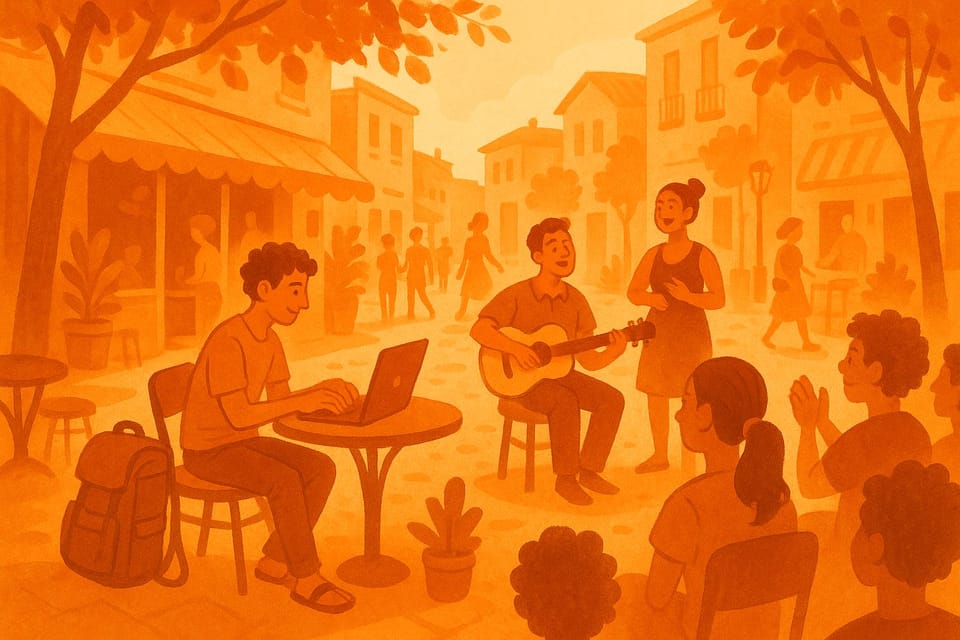
Local events for language learning are wildly underused by digital nomads, mostly because people hear “local event” and imagine some giant cultural festival where they are supposed to magically make friends, absorb vocabulary, and become interesting in another language by sunset. That is not how it works. The real win is smaller and better. The best local events for language learning are recurring neighborhood rituals, market mornings, trivia nights, volunteer shifts, book clubs, maker fairs, community workshops, and weekly classes where the same faces show up often enough that conversation can actually compound.
This matters because most nomads get trapped between two bad options. Option one, tourist mode, where every day is logistical chaos and no relationship has time to deepen. Option two, expat mode, where everything happens in English and the city becomes expensive wallpaper. Local events fix that if you use them right. They give you recurring context, repeated vocabulary, and low-pressure reasons to show up again.
We have already talked about the neighborhood immersion system, learning local slang without sounding fake, language learning neighborhood walks, and weekly exchange routines. Local events sit right in the middle of those systems. They are where routine meets community.
Why local events for language learning work better than random socializing
Because events give you built-in context. You do not need to invent conversation from thin air. There is already a shared topic, shared task, shared schedule, and usually a predictable group structure. That takes a lot of pressure off.
Second-language acquisition research has been beating this drum forever, interaction works better when learners can negotiate meaning inside a real social context. The Center for Applied Linguistics has a practical guide on interaction and language learning that breaks down why recurring, communicative environments help learners build confidence and comprehension faster (https://www.cal.org/adultesl/pdfs/Interaction-Language-Learning-and-Classroom-Practice-An-Introductory-Guide.pdf). The British Council also keeps emphasizing that meaningful communication beats isolated textbook drilling when the goal is real use (https://www.britishcouncil.org/voices-magazine/how-can-you-make-language-learning-more-meaningful).
In plain terms, local events for language learning work because they reduce blank-page syndrome. You are not “networking.” You are discussing the market, the film, the recipe, the workshop, the route, the game, or the volunteer task right in front of you.
The best kinds of local events for language learning
1. Weekly neighborhood markets
Markets are gold because the language repeats. Prices, ingredients, preferences, quantities, small talk, local slang, and mini jokes all come back around. Go often enough and the same vendors start recognizing you.
2. Community classes
Cooking classes, dance sessions, pottery workshops, photography walks, improv nights, climbing groups, and city-run courses all create repeated contact with the same vocabulary field. You learn words tied to action, not random lists.
3. Volunteer events
Clean-up projects, mutual-aid drives, animal shelter shifts, and neighborhood support programs are fantastic because they give you shared purpose. Shared purpose kills awkwardness faster than forced small talk.
4. Book clubs and film clubs
These are perfect for upper beginners and intermediates because the topic is already supplied. You do not need charisma, just one opinion and the ability to ask a follow-up question.
5. Recurring hobby groups
Board games, run clubs, open studio hours, language cafés, hiking groups, and maker spaces create that sweet spot of repetition plus novelty.
If you already use coworking spaces for immersion, stack one local event onto that base instead of trying to build your entire social life from scratch every week.
How digital nomads should choose local events for language learning
Not all events are equal. Pick using these filters.
- Recurring: once is fine, weekly is better
- Small enough to talk: if it feels like a concert, forget it
- Task-based: better than pure mingling
- Local-heavy: avoid spaces that are ninety percent nomads talking about visas and protein powder
- Reachable: if getting there is a pain in the ass, you will not go enough
That last point matters more than people admit. Consistency beats idealism. A decent weekly event ten minutes away crushes a perfect monthly event across the city.
A practical system for using local events for language learning
Before the event
- learn 8 to 12 words tied to the activity
- prepare three simple questions
- decide one survival sentence for when you get lost
Examples:
- “Can you show me how that works?”
- “Do people usually bring their own equipment?”
- “I missed that, could you say it slower?”
During the event
- aim for three tiny conversations, not one perfect one
- reuse the same questions with different people
- notice repeated phrases and write them down right after
This is also where local slang learning becomes more natural. You hear what people actually say in the activity, not what some random “top 20 slang words” article told you to memorize.
After the event
- save five useful phrases
- message one person if the event supports follow-up
- schedule the next appearance immediately
If you do not lock in the next visit while the experience is fresh, you drift. Drift is the enemy.
Mistakes that make local events useless
You keep changing events every week
That feels adventurous. It is actually just reset addiction.
You bring English as a security blanket
Obviously use it when needed, but if you panic-switch at the first awkward pause, you cut the reps short every time.
You go only to perform confidence
Bad plan. Go to observe, participate, and return. Belonging grows from recurrence, not one heroic night.
You choose events with no conversational oxygen
Loud bars, giant festivals, and chaotic parties are usually garbage for this goal. They are fun, sure, but they are not the best local events for language learning.
Where to find local events without wasting your life online
Use a short list and move on.
- Meetup for recurring hobby and community groups (https://www.meetup.com/)
- Eventbrite for local workshops and public events (https://www.eventbrite.com/)
- Facebook Events, yes unfortunately, for neighborhood-level stuff (https://www.facebook.com/events/)
- local library and cultural center calendars
- community notice boards in cafes, gyms, coworking spaces, and markets
The best stuff often looks unglamorous. That is usually a good sign.
A weekly rhythm that makes this sustainable
Here is a sane setup for nomads.
- One anchor event: same event every week
- One roaming event: something new every other week
- One neighborhood habit: market, cafe, gym, or class that reinforces the same language field
This pairs beautifully with the neighborhood system because your event life stops floating separately from your daily life. Same streets, same people, same words coming back around.
My take
Local events for language learning are not magic. They are better than magic, they are repeatable. They give you the one thing most digital nomads are missing, social recurrence strong enough to turn exposure into memory and memory into speech.
Forget the fantasy that one dramatic immersion moment changes everything. What actually works is smaller. Show up at the same market, the same class, the same club, the same volunteer project, and let the city start recognizing you. That is when the language stops feeling rented.
So, what kind of local event in your current city would you actually be willing to attend three weeks in a row?