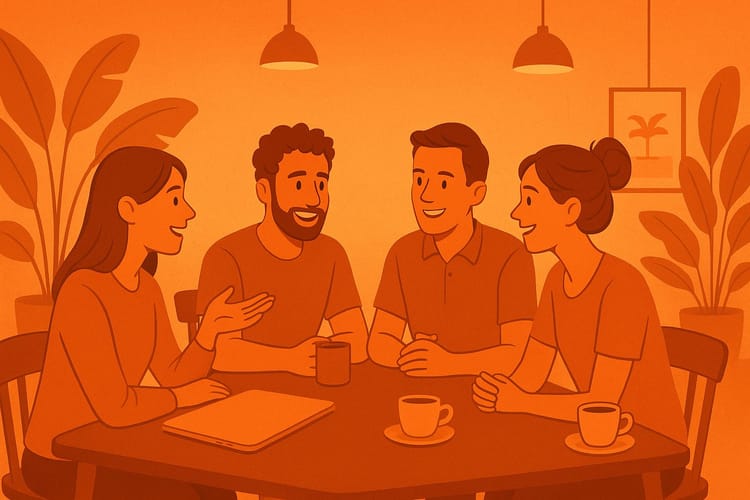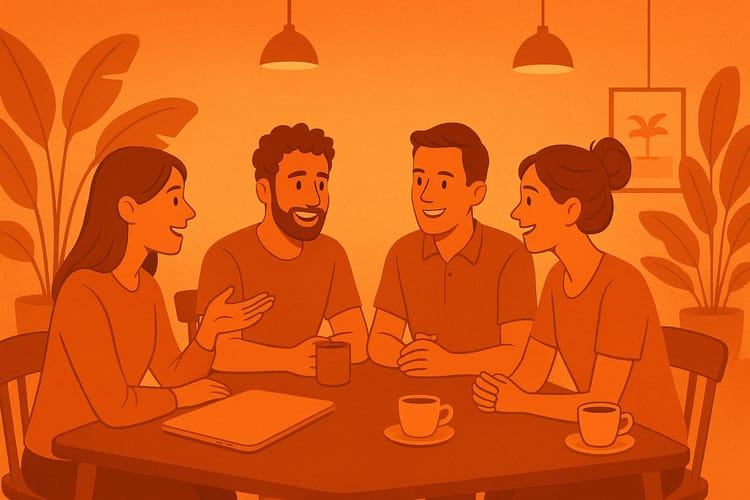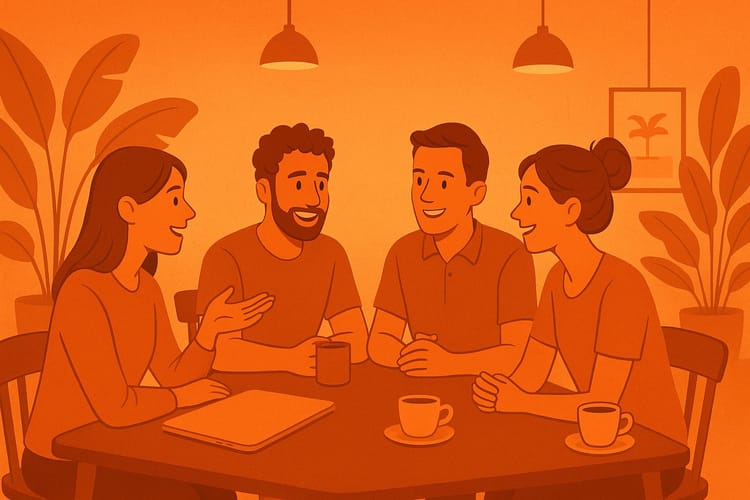
Language Exchange Club for Digital Nomads: The Weekly System That Turns Strangers Into Local Speaking Partners
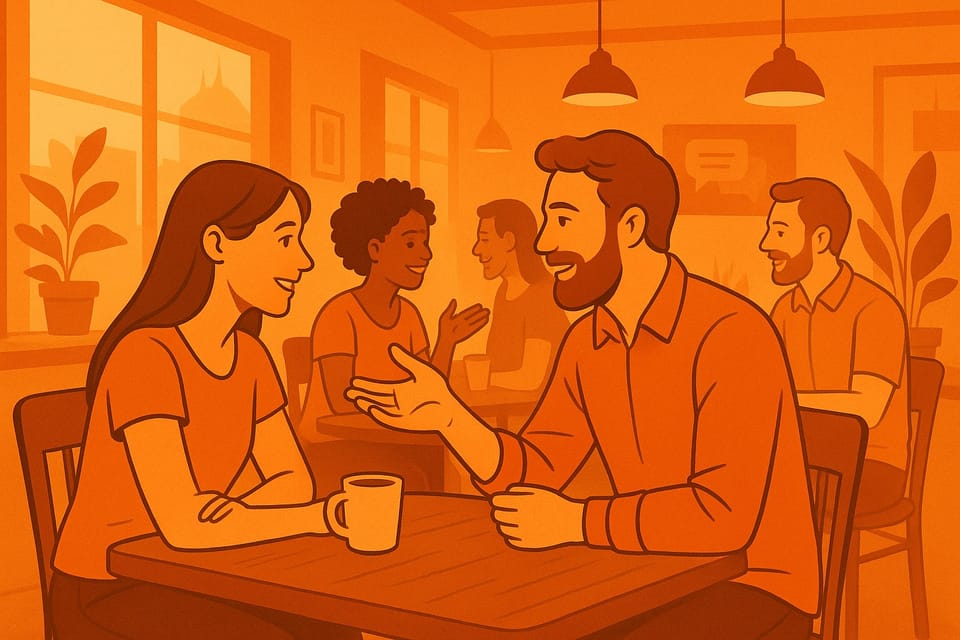
Language Exchange Club for Digital Nomads: The Weekly System That Turns Strangers Into Local Speaking Partners
A language exchange club for digital nomads beats random meetups for one simple reason: repetition beats novelty. Most travelers keep making the same mistake. They land in a new city, search for a language meetup, attend one chaotic event full of other foreigners, have three surface-level chats, then disappear. A week later they tell themselves immersion is hard abroad. No kidding. They built a social life out of one-off events.
That is why this keyword keeps making sense. The search intent behind language exchange club for digital nomads and how to find regular language exchange abroad is not really about discovering one event. It is about building continuity. People want regular speaking partners, local friendships, and a structure that compounds trust. Competitor posts keep listing meetups and apps. Very few explain how to turn a bunch of strangers into a recurring club.
If you actually want local speaking partners, a language exchange club for digital nomads needs structure, recurrence, and a neighborhood-level loop. You are not hunting for magical extrovert energy. You are building a weekly system that makes trust and language practice compound.
Why a language exchange club for digital nomads beats random meetups
The standard meetup model is overrated.
You show up once. Nobody knows who belongs there. Half the group wants friends, half wants dates, half wants clients, and somehow all three halves are talking at once. The loudest people dominate. Beginners freeze. Locals leave early. Everybody says “we should do this again,” and nobody means it.
A real language exchange club for digital nomads solves a different problem. It creates a predictable place where the same people return often enough to relax. And relaxed people speak more.
This is the same logic behind neighborhood language immersion for digital nomads. Repeated exposure in one area beats constantly resetting your social graph all over the city.
There is also solid support for the broader principle. Social learning research and interaction studies in second-language acquisition keep showing that repeated interaction lowers anxiety and improves negotiation of meaning. The Center for Applied Linguistics has a practical intro guide on why interaction-rich environments matter so much (https://www.cal.org/adultesl/pdfs/Interaction-Language-Learning-and-Classroom-Practice-An-Introductory-Guide.pdf).
The keyword nobody is talking about is “club,” not “meetup”
That is the real opportunity.
The phrase language exchange club for digital nomads has stronger intent than generic meetup keywords because the searcher is looking for continuity, identity, and a group worth returning to.
The adjacent search pattern around this topic clusters around needs like:
- recurring language meetup abroad
- weekly speaking practice group
- make local friends while traveling
- regular language exchange abroad
And the people-also-ask layer is basically the same pain, phrased more honestly:
- Are language exchanges worth it for digital nomads?
- How do digital nomads make local friends fast?
- What works better than one-off meetups?
That pain is real. Most content in this niche barely touches it.
The 5-part system for building a language exchange club for digital nomads
Here is the part that actually matters.
H2 Pick one neighborhood and stop bouncing around
If you run the club in a different venue every week, you are doing tourism, not community design.
Pick one neighborhood with three things:
- a walkable cafe or bar that is not too loud
- enough locals passing through that the group does not become an expat aquarium
- a routine you can sustain for at least four weeks
This is exactly why using one coworking base to build a native-speaking network works so well. Familiar geography reduces coordination friction, and low friction is everything.
H2 Set a repeatable format, not a vague invitation
“Come practice languages sometime” is not a format. It is a wish.
Use a simple 75-minute structure.
First 15 minutes, casual arrival
People settle in, grab a drink, meet newcomers.
Next 20 minutes, topic round one
Pair people up. One language only. Use a prompt like local routines, first impressions of the city, or a misunderstanding from the week.
Next 20 minutes, swap language or partners
Enough variety to keep energy up, not enough chaos to kill momentum.
Final 20 minutes, open conversation and next-week planning
This ending matters more than most organizers realize. If nobody confirms the next session while everyone is still there, momentum dies.
That structure beats free-form wandering because it gives shy people a role and stops loudmouths from turning the night into their own podcast.
H2 Recruit for consistency, not size
The rookie mistake is chasing headcount.
You do not need 30 people. You need 6 to 10 who come back.
Start with three buckets:
- one or two locals who actually want reciprocal practice
- two or three remote workers staying at least a month
- one connector who always knows who else to invite
Coworking communities, neighborhood WhatsApp groups, local university boards, and community cafes are better recruitment channels than giant generic expat groups.
Useful discovery tools still exist, if you use them as fuel instead of the whole strategy:
- Meetup for initial visibility (https://www.meetup.com/)
- Internations in some cities, if you filter aggressively (https://www.internations.org/)
- Eventbrite for city-level event discovery (https://www.eventbrite.com/)
H2 Build a rhythm that rewards return visits
A language exchange club for digital nomads only works when coming back makes next week better.
Use small continuity devices:
- recurring discussion themes
- one shared group chat recap
- a rotating mini-host role
- “bring one useful phrase from this week” as a standing ritual
This is basically habit design applied to social learning. James Clear gets quoted to death, but the cue logic still holds, predictable time plus place plus identity makes a behavior easier to repeat (https://jamesclear.com/habits).
H2 Convert club energy into real local speaking reps
The club itself is not the point. It is the engine.
The goal is to create low-pressure interactions during the rest of the week.
Examples:
- two members meet for a market run in the target language
- one local member invites people to a neighborhood event
- two remote workers send each other daily voice notes
- someone builds a mini list of patient local shops and cafes
That is when the language exchange club for digital nomads stops being an event and becomes an immersion layer.
Mistakes that ruin a language exchange club for digital nomads
Here are the usual screwups.
Making English the emergency default
If every awkward silence flips the room into English, the club becomes networking cosplay.
Set clear language rounds. Adults can survive 20 minutes.
Letting transient people set the tone
Backpackers staying four days are not the core. They can join, sure, but they should not define the structure.
Picking venues optimized for aesthetics instead of acoustics
Cute rooftop bars are trash for speaking practice. If people cannot hear each other, you built an Instagram story, not a club.
Confusing breadth with depth
Ten weak contacts are less useful than three people who will actually text you back tomorrow.
That is also why a weekly language exchange routine beats endlessly hunting fresh events.
A four-week launch plan you can steal
Week 1, seed the core
Invite five to seven people directly. Do not blast a giant post yet. Tell them it is a pilot.
Week 2, tighten the format
Keep what worked. Kill whatever felt fuzzy. Ask who is likely to return.
Week 3, add one visibility layer
Post in one coworking group, one neighborhood group, or one local board. Not twelve.
Week 4, create continuity outside the session
Start a simple group chat and share next week’s theme before people forget the club exists.
If you move often, this pairs well with building language routines across time zones. The trick is keeping one recurring anchor even while life moves around.
External resources worth keeping handy
These are worth using:
- Meetup for event discovery (https://www.meetup.com/)
- Internations for international community discovery (https://www.internations.org/)
- Eventbrite for local events (https://www.eventbrite.com/)
- CAL’s interaction guide for the learning theory (https://www.cal.org/adultesl/pdfs/Interaction-Language-Learning-and-Classroom-Practice-An-Introductory-Guide.pdf)
- FeverBee’s community event playbook for recurring-group design (https://www.feverbee.com/community-events/)
Use them to support the system, not replace it.
The bottom line
A language exchange club for digital nomads works because it replaces novelty addiction with recurrence. You stop chasing random chemistry and start designing a place where trust, jokes, shared references, and speaking courage can build over time.
That is what most nomads are actually missing. Not another app. Not another city guide. Not another one-off event with bad acoustics and ten people who vanish forever.
They are missing repeated human contact in one place long enough for their target language to stop feeling like a costume.
If you are tired of meetups that go nowhere, build the damn club.
What city are you in right now, and what kind of weekly language exchange club would actually make you show up again next Tuesday?