
The Digital Nomad's Language Learning Roadmap: How to Master Local Languages While Working Remotely
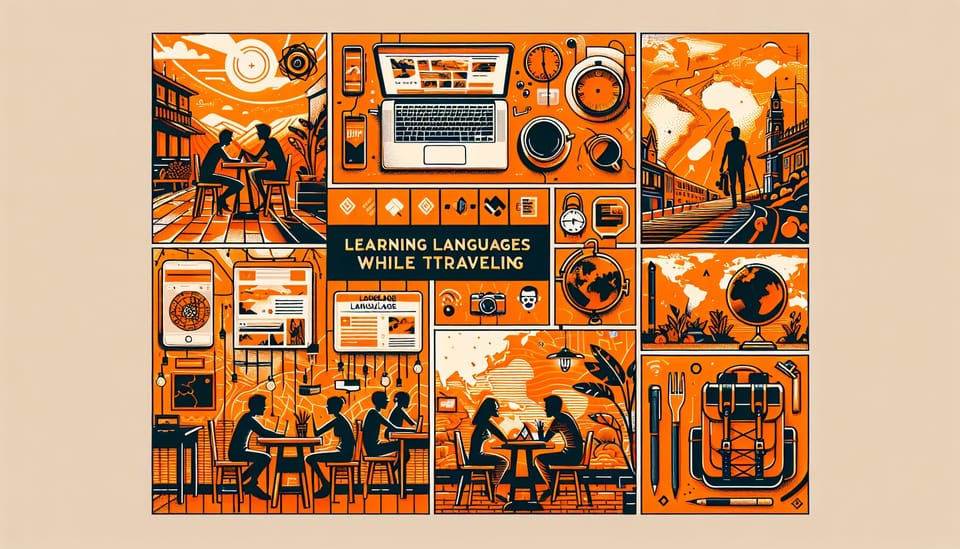
The Digital Nomad's Language Learning Roadmap: How to Master Local Languages While Working Remotely
You've landed in Lisbon for a three-month stint. The coworking space has great WiFi, the coffee is incredible, and your remote job is humming along smoothly. There's just one problem: you're living in a linguistic bubble.
You order in English, your coworking buddies speak English, and after eight weeks, you've learned exactly three Portuguese phrases. Sound familiar?
As a digital nomad, you have an incredible advantage for language learning: physical presence in countries where your target language is spoken. But here's the brutal truth most nomads don't want to hear: simply being in a country doesn't make you fluent. Location is opportunity, not outcome.
In 2026, more people than ever are working remotely while traveling – the "digital nomad" population reached 35 million globally, according to recent estimates. Yet most nomads never achieve real fluency in the languages of the places they live.
This comprehensive guide will show you exactly how to combine remote work with effective language learning, turning your nomadic lifestyle from a linguistic disadvantage into your secret weapon for fluency.
Why Digital Nomads Struggle With Language Learning (And How to Fix It)
Let's diagnose the problem before we solve it.
The English Bubble Effect
Digital nomad hotspots – Bali, Chiang Mai, Lisbon, Medellín, Mexico City – are designed for English speakers. You can live there for years without learning more than "hello" and "thank you."
The comfort trap:
- Coworking spaces: English-speaking community
- Accommodation: Hosts who speak English
- Restaurants/cafes: English menus, English-speaking staff
- Social life: Other expats and nomads who speak English
- Work: Entirely in English
Your brain has zero external pressure to learn the local language. Unlike traditional expats (who need local language for work) or travelers (who need it for navigation), you can function perfectly well in your bubble.
The Solution: You must artificially create pressure and necessity. We'll show you how.
The Time Scarcity Paradox
"I don't have time to study – I'm working full-time!"
But here's what research shows: the average digital nomad spends:
- 8-9 hours working
- 2-3 hours on social media, YouTube, Netflix
- 1-2 hours in cafes/coworking social time
- 1 hour meal prep/eating
That's 3-4 hours of potentially convertible time. The issue isn't time scarcity – it's priority and strategy.
The Shallow Immersion Problem
You're physically in Thailand but mentally in English. Your brain spends 90% of its linguistic time in English (work, entertainment, social life) and maybe 10% encountering Thai.
Contrast this with a student in a language school: 4-6 hours daily of forced target language exposure, plus social immersion.
The truth: A student in a language school in their home country often gets MORE target language exposure than a digital nomad living in the target country.
The Digital Nomad Language Learning Framework
Here's the systematic approach that actually works:
Phase 1: Pre-Arrival Preparation (4-6 Weeks Before)
Don't wait until you arrive. Start learning before you board the plane.
Why this matters: Arriving with A1-A2 basics completely changes your experience. You can navigate, make small talk, and start practicing immediately instead of spending your first month on Duolingo in your Airbnb.
Your Pre-Arrival Checklist:
✓ Learn 300-500 core words using spaced repetition (Anki, Memrise)
✓ Master basic grammar: present tense, common verbs, basic questions
✓ Practice pronunciation (YouTube, Forvo, language learning apps)
✓ Learn survival phrases: directions, ordering, numbers, emergencies
✓ Find 2-3 language exchange partners from your destination country online
Time investment: 30-45 minutes daily for 4-6 weeks = arrive with functional basics.
According to research from Middlebury Language Schools, learners who complete pre-immersion study progress 40% faster once in-country compared to those who arrive cold.
Phase 2: The First Two Weeks – Intensive Immersion Sprint
Your first two weeks set the trajectory for your entire stay. Most nomads waste this crucial period settling in. Don't.
The Two-Week Intensive Protocol:
Week 1: Survival Integration
- Morning (2 hours before work): Language lesson with local tutor (in-person or online)
- During work breaks: Anki reviews, passive listening
- After work: Attend language exchange meetup or conversation group
- Evening: Watch local TV with subtitles, or local YouTube channels
Week 2: Routine Establishment
- Continue morning lessons but reduce to 1 hour
- Implement "local life" activities: grocery shopping, gym, local cafe (not expat spot)
- Schedule 2-3 conversation exchanges with locals
- Start thinking in target language (narrate your day mentally)
The psychology: These two weeks build momentum and habits that carry forward. Front-load your effort while motivation is high.
Phase 3: Sustainable Daily Practice (Week 3 Onwards)
After the intensive sprint, shift to sustainable long-term practice integrated with work and life.
The Nomad's Daily Language Schedule:
Morning Routine (30-45 minutes):
- 6:30-7:00 AM: Anki vocabulary review + grammar study
- 7:00-7:30 AM: Breakfast while watching local news or YouTube
During Workday (15-20 minutes):
- Lunch break: Conversation with café staff, order in target language
- Background audio: Local radio or podcast while doing routine work tasks
Evening (45-60 minutes):
- 6:00-6:30 PM: Conversation exchange (in-person or video call)
- 7:00-8:00 PM: Leisure in target language (Netflix, YouTube, reading)
Total active study time: ~60-90 minutes
Total passive exposure: ~90-120 minutes
This is sustainable alongside full-time remote work and still provides 2-4 hours of daily language contact.
Phase 4: Deepening Integration (Month 2-3)
By month two, basics should be solid. Now deepen your connection to the language and culture.
Advanced Integration Strategies:
1. The Local Friend Strategy
Make at least one genuine local friend (not a language exchange partner – an actual friend).
How:
- Join hobby groups (climbing gym, yoga, running club, board game nights)
- Use Meetup, Couchsurfing events, Facebook groups for activities you genuinely enjoy
- Volunteer with local organizations
- Take a class (cooking, dancing, martial arts) taught in local language
Research from Cultural Vistas shows that meaningful friendships drive language acquisition faster than formal study, especially for intermediate learners.
2. The Service Provider Rotation
Build recurring relationships with service providers who don't speak English:
- Haircut every 3-4 weeks (same barber, increasing conversation)
- Regular mechanic/bike shop visits
- Weekly market visits (same vendors)
- Gym or yoga studio (interact with staff and other members)
These regular, low-pressure interactions build conversational confidence.
3. The Side Project in Target Language
Start a small project that requires local language:
- Blog or Instagram documenting local culture (in local language)
- Freelance project for a local client
- Teach English to locals (requires giving instructions in their language)
- Create language learning content for your native language speakers
This creates authentic necessity and purpose for language use.
Location Strategy: Choosing the Right Nomad Destination for Language Learning
Not all digital nomad hotspots are equal for language learning.
Tier 1: Immersion-Forcing Locations
Places where English is not widely spoken, forcing daily language use:
Latin America:
- Small cities in Mexico (Oaxaca, Guanajuato) vs. tourist-heavy Playa del Carmen
- Smaller Colombian cities (Manizales, Pereira) vs. Medellín's Poblado district
- Interior Brazilian cities vs. Rio/São Paulo expat areas
Asia:
- Vietnam (except major expat areas of HCMC/Hanoi)
- Taiwan (outside Taipei expat zones)
- Non-touristy parts of Thailand (Chiang Rai, Udon Thani vs. Bangkok/Chiang Mai)
Europe:
- Poland, Czech Republic (outside Prague center)
- Portugal (smaller cities vs. Lisbon/Porto)
- Spain (regional cities vs. Barcelona/Madrid expat zones)
Advantages: Forced daily practice, authentic immersion, usually lower cost
Challenges: Fewer coworking spaces, smaller expat community (can be isolating)
Tier 2: Balanced Locations
Places with expat infrastructure but still good immersion potential:
- Medellín (Colombia) – large enough to find Spanish immersion with expat safety net
- Lisbon (Portugal) – manageable with Portuguese in most daily situations
- Mexico City – huge city with both expat and local spheres
- Buenos Aires – European-style city with strong local culture
Strategy: Live outside the main expat zones, work in coworking occasionally but not exclusively.
Tier 3: English-Dominant Locations
Digital nomad hotspots where English is pervasive:
- Bali (Indonesia) – Canggu/Ubud expat bubble
- Bangkok (Thailand) – especially digital nomad districts
- Dubai (UAE)
- Major tourist zones in any country
Reality check: You can learn the language here, but it requires extreme discipline and intentionality. You're fighting against the environment rather than leveraging it.
The Multi-Country Strategy
Want to learn multiple languages? Use your mobility:
The 3-6 Month Rotation:
- 3-6 months: Mexico (Spanish)
- 3-6 months: Brazil (Portuguese)
- 3-6 months: Argentina (Spanish dialect, consolidation)
The Regional Deep Dive:
- 12 months in Southeast Asia rotating: Thailand (3 mo.) → Vietnam (3 mo.) → Thailand (3 mo.) → Vietnam (3 mo.)
- This rotation prevents burnout while building deep fluency
Research from the Foreign Service Institute suggests that 3-6 month immersion periods are optimal – long enough for deep learning, short enough to maintain high motivation.
Work-Life-Language Integration Tactics
The key is making language learning enhance (not compete with) your work and life.
The Coworking Language Hack
Most nomads use coworking spaces but miss language opportunities:
Standard Approach:
- Arrive, put on headphones, work in English, leave
Language-Learning Approach:
- Arrive 15 minutes early, chat with staff in local language
- Take breaks to converse with local members (not just expats)
- Attend coworking events conducted in local language
- Offer to lead a presentation/workshop in local language (great practice!)
The Content Consumption Switch
Your downtime is currently all in English. Flip it:
Instead of:
- Netflix in English → Netflix in target language (even with English subtitles initially)
- YouTube in English → Local YouTubers in target language
- Music in English → Local music (lyrics are great learning tools)
- Reddit/Twitter in English → Local social media, forums, subreddits
The 70/30 Rule: 70% of leisure content in target language, 30% in English (maintain sanity and catch up on news/culture from home).
This adds 10-15 hours weekly of passive exposure with zero additional time investment.
The "Work in Public" Strategy
Instead of working from your apartment, work in local (non-expat) cafés:
Benefits:
- Overhear local conversations (passive listening practice)
- Force ordering and small talk in local language
- Observe cultural norms and body language
- Become a regular (staff will chat with you)
Pro tip: Rotate between 2-3 regular cafés. Staff will get to know you, creating natural conversation opportunities.
The Skill Arbitrage Approach
You have valuable skills. Trade them for language practice:
- Teach English to a local professional in exchange for language/cultural exchange
- Offer your professional skills (design, marketing, coding) to local businesses – use the meetings/collaboration as language practice
- Create YouTube/blog content about language learning in your target language – teaching others forces you to learn deeply
Technology Stack for Nomadic Language Learning
In 2026, the right tools make all the difference:
Essential Apps and Platforms
Spaced Repetition:
- Anki (free, powerful, customizable) – create your own decks with words you encounter
- Anki mobile apps sync across devices (critical for nomads)
Conversation Practice:
- iTalki – affordable tutors available 24/7 (time zone flexible)
- HelloTalk / Tandem – free language exchange with locals
- Local Meetup.com groups for in-person practice
Content Consumption:
- Netflix/Disney+ with VPN to access local country's catalog
- YouTube Premium (download videos for offline viewing while traveling)
- Podcast apps with local language podcasts
- LingQ for reading with inline translations
Specialized Tools:
- Google Translate offline mode (download language packs)
- Forvo (pronunciation of any word by native speakers)
- DeepL (best translation for European languages)
- Grammar books/apps specific to your target language
The Nomad's Tech Setup
Device Strategy:
- Phone: Set to target language (forces daily interaction)
- Laptop: Work in English (practical), but use target language for personal tasks
- Tablet/e-reader: Dedicated to target language content
Connectivity:
- Download language lessons, flashcards, videos when on strong WiFi
- Offline-capable apps for unreliable internet situations
- VPN for accessing content from target country
The Social Side: Building a Language-Learning Support Network
Solo language learning while nomading is hard. Build your support system:
Finding Language Partners
Online Before Arrival:
- Join Facebook groups for expats in your destination
- Find language exchange partners on HelloTalk/Tandem
- Connect with locals via Couchsurfing (even if not staying with hosts)
On the Ground:
- Language exchange meetups (usually free, weekly)
- University conversation partner programs
- Apps like Bumble BFF (set to locals interested in language exchange)
The Accountability Partnership
Find another language-learning nomad and create mutual accountability:
- Daily check-ins on study completion
- Weekly conversation practice together
- Shared goals and progress tracking
- Friendly competition (who can have more conversations this week?)
Research from Stanford's Behavioral Science Lab shows that social accountability increases goal completion rates by 65%.
Creating Your "Third Culture" Community
Don't choose between local friends and expat friends – build both:
- Local friends: Authentic language practice, cultural insight
- Expat friends: Emotional support, shared experiences
- Other language learners: Mutual encouragement, strategy sharing
The healthiest nomadic language learners maintain all three circles.
Overcoming Common Digital Nomad Language Learning Challenges
Let's address the obstacles specific to nomadic life:
Challenge #1: "I'm Only Here for 3 Months"
The scarcity mindset: "Why bother learning if I'm leaving soon?"
The abundance reframe: Three months of focused study gets you to A2-B1 (conversational basics). That's enough to:
- Make local friends
- Navigate independently
- Enjoy local media
- Have a foundation if you return or move to another country using the same language
Plus: You might fall in love with the country and extend. Many nomads do.
Challenge #2: Constant Travel Disrupts Consistency
Moving between cities/countries every few weeks destroys routine.
Solutions:
- Keep your core tools consistent (same apps, same tutors via video)
- Maintain minimum viable practice: 15-minute daily non-negotiable
- Use travel days for passive listening (podcasts during flights/buses)
- Accept that intensity will fluctuate – consistency over perfection
Challenge #3: Motivation Crashes After the Honeymoon Phase
Weeks 1-4: Exciting! New country! Languages!
Weeks 5-8: Work pressure mounts, social life settles, language practice drops
Solutions:
- Pre-commit to language events (pay for classes/tutoring in advance)
- Tie language to activities you enjoy (if you love climbing, find a climbing gym with locals)
- Track visible progress (record yourself speaking monthly to see improvement)
- Join online challenges (#100DaysOfLanguageLearning, etc.)
Challenge #4: Isolation in Non-English Environments
Sometimes immersion can be overwhelming and isolating, especially before you reach conversational level.
Balance strategies:
- Schedule regular calls with English-speaking friends/family
- Allow yourself one "English day" per week for mental rest
- Find one English-speaking friend locally for emergencies/support
- Remember that discomfort is temporary – push through the first 4-6 weeks
Measuring Progress: The Nomad's Language Learning Milestones
Traditional metrics (CEFR levels, test scores) don't capture real-world nomadic fluency. Use these instead:
Month 1 Milestones
✓ Order food/drinks without English or gestures
✓ Handle basic transactions (grocery, pharmacy)
✓ Give/understand simple directions
✓ Introduce yourself and have 2-minute small talk
Month 2 Milestones
✓ Have a 10-minute conversation about your life/work
✓ Understand the gist of TV shows (with subtitles)
✓ Read social media posts and understand main ideas
✓ Make a local friend and chat casually
Month 3 Milestones
✓ Discuss abstract topics (politics, philosophy, emotions)
✓ Watch content without subtitles (60-70% comprehension)
✓ Write coherent messages/emails
✓ Attend local events and follow what's happening
6+ Month Milestones
✓ Professional conversations in your field
✓ Catch jokes and cultural references
✓ Dream occasionally in target language
✓ Comfortable in any daily situation without preparation
The Ultimate Question: Should You Stay Longer or Move On?
Many nomads face this dilemma: stay another few months to deepen language skills, or move to the next country?
Stay if:
- You're genuinely enjoying the language and culture
- You're at B1 (conversational) and can reach B2 (comfortable fluency) with more time
- You have local friendships deepening
- The country has long-term appeal (potential return/remote work base)
Move on if:
- You've achieved your goals (A2 basics for travel purposes)
- Motivation has genuinely died (not just a temporary slump)
- Another location offers better learning environment
- You're learning the language primarily for this specific location (and won't use it elsewhere)
The hybrid approach: Move on but maintain the language through online tutoring and content consumption. Return for 1-2 months annually to practice and advance.
Action Plan: Your First 90 Days as a Language-Learning Nomad
Ready to put this into practice? Here's your concrete roadmap:
Before Arrival (4 weeks)
- [ ] Choose destination with language learning in mind
- [ ] Start daily study: 30 min vocabulary + 15 min grammar
- [ ] Find online language exchange partners from destination country
- [ ] Learn 300-500 core words
- [ ] Research local language meetups and conversation groups
Week 1-2: Intensive Sprint
- [ ] Book daily lessons with local tutor (in-person or online)
- [ ] Attend 2-3 language exchange events
- [ ] Change phone/apps to local language
- [ ] Establish regular cafés/venues where you'll practice
- [ ] Make first local friend or language partner
Week 3-4: Routine Integration
- [ ] Reduce lessons to 2-3x per week (sustainable level)
- [ ] Join one regular weekly activity in local language
- [ ] Switch 70% of entertainment to local language
- [ ] Start side project or service requiring local language
- [ ] Record yourself speaking (baseline for future comparison)
Month 2-3: Deepening
- [ ] Take on a small freelance project in local language
- [ ] Attend local events (not expat-focused)
- [ ] Read first book or finish first TV series in target language
- [ ] Make at least one genuine local friend
- [ ] Reach conversational fluency (B1) milestone
Expected outcome after 90 days: Functional conversational ability, cultural integration, and sustainable learning habits that will carry you to fluency.
The Bigger Picture: Language Learning as Nomadic Lifestyle Design
Here's the real secret: language learning makes the nomadic lifestyle infinitely richer.
When you speak the local language:
- You access the real culture, not the tourist/expat surface layer
- You build genuine relationships instead of transactional encounters
- You can live in cheaper, more authentic neighborhoods
- You gain access to local professional opportunities
- You experience travel more deeply and meaningfully
The best nomads I know aren't those who've visited the most countries – they're those who've connected most deeply with the places they've been. Language is the key to that depth.
Your challenge: Don't just work remotely from exotic locations. Use your nomadic lifestyle as the ultimate language learning accelerator.
Most people will never have the opportunity to live for months in foreign countries while maintaining their income. You do. Don't waste it.
Are you a digital nomad learning languages? What's worked for you? What challenges have you faced? Share your experience and questions in the comments – let's build a community of globally fluent nomads!
Planning your next nomadic destination? Check out our guides on the best cities for language immersion and balancing remote work with intensive language study for more location-specific strategies.